

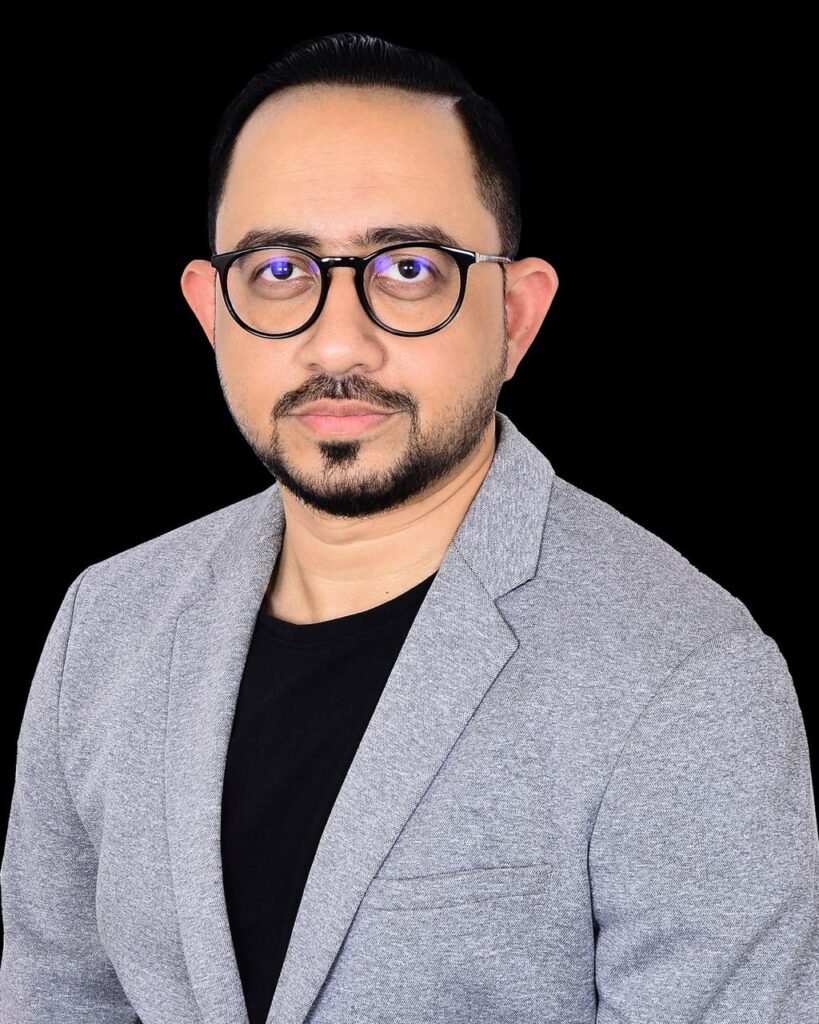
An Exclusive Apparel Times BD Interview with Rubaet Bin Aziz (Strategic HR & Business Transformation Specialist | Bridging People Strategy with Business Outcomes | Global Apparel Leadership)
As global sourcing continues to evolve, the future competitiveness of Bangladesh’s apparel industry will depend increasingly on its people—how organizations develop leaders, strengthen workforce capability, embrace technology, and build sustainable business cultures.
In this exclusive interview, Rubaet Bin Aziz, a Strategic HR & Business Transformation Specialist, with nearly two decades of experience in Bangladesh’s RMG sector, shares his insights on leadership, HR transformation, productivity, AI, sustainability, and preparing the next generation of apparel professionals.
Section 1 | Two Decades of Building People, Organizations and Business Performance
Q:
You have spent nearly two decades working across different areas of Human Resources in Bangladesh’s apparel industry. Could you briefly share your career journey and the philosophy that has shaped your approach to HR?
A:
Over the past two decades, I have had the privilege of working with some of Bangladesh’s largest apparel manufacturing organizations, each employing more than 14,000 people and operating in highly competitive global markets. My experience has extended well beyond traditional HR responsibilities, covering organizational development, global talent acquisition, employer branding, performance management, learning and development, business intelligence, and business transformation.
Working across organizations of this scale has given me the opportunity to observe the apparel industry from multiple perspectives—from production floors and compliance audits to executive boardrooms and buyer interactions. These experiences have shaped my understanding of how organizations succeed, where they struggle, and what differentiates sustainable businesses from those that merely react to change.
One lesson has remained constant throughout my career: people are the single most important driver of organizational success.
However, people alone are not enough. Sustainable transformation happens when people, technology, organizational structure, and culture work together toward a common purpose. That alignment is where HR creates its greatest value.
For me, Human Resources should never be viewed simply as an administrative or compliance function. It should operate as a strategic business partner—helping organization to build capability, strengthen leadership, improve productivity, and prepare for the future.
Ultimately, successful organizations are not built solely through better systems or better technology. They are built by creating environments where people can consistently perform at their best.
Section 2 | HR Is No Longer a Support Function
Q:
In your opinion, what does “Strategic HR” really mean in today’s Bangladesh RMG industry, and how does it differ from traditional HR management?
A:
The role of HR is undergoing a significant transformation, although the pace of that transformation differs considerably across Bangladesh’s apparel sector.
Among leading manufacturers, HR is increasingly recognised as a strategic function that contributes directly to business performance. Workforce planning, organizational design, leadership development, succession planning, and capability building are becoming integral parts of business strategy rather than isolated HR initiatives.
In these organizations, HR works closely with functions such as Industrial Engineering, Operations, and Finance to ensure that workforce planning aligns with production capacity, buyer demand, and long-term business objectives. Performance is measured through clear KPIs, accountability is shared across functions, and employee development becomes part of operational excellence rather than an annual training exercise.
The outcome is not only improved employee engagement but also measurable business benefits, including stronger retention, higher productivity, and greater organizational stability.
However, this level of strategic integration is not yet common across the industry.
Many small and mid-sized factories continue to operate in a reactive environment, where HR remains heavily focused on recruitment, attendance, payroll, and compliance. Operational pressures often leave little room for leadership development, coaching, or long-term workforce planning. In many cases, improvements in workplace practices are driven primarily by buyer requirements or regulatory compliance rather than a genuine organizational commitment to people development.
I believe the next stage of Bangladesh’s competitiveness will depend on closing this gap. HR must evolve from managing people to building organizational capability. When HR is integrated into business strategy, it becomes one of the strongest enablers of sustainable growth rather than simply a support function.
Section 3 | Bangladesh’s Workforce: Strong Foundations, Uneven Readiness
Q:
Bangladesh has built one of the world’s largest apparel workforces. How would you assess its current capability across operators, middle management, and senior leadership?
A:
Bangladesh’s apparel workforce has been instrumental in building the country’s position as the world’s second-largest apparel exporter. However, capability is not uniform across the industry. Each level of the workforce faces different challenges, and understanding these distinctions is essential if we want to prepare for the next phase of growth.
At the operator level, Bangladesh remains exceptionally strong in production execution. Our sewing operators have developed remarkable speed, consistency, and adaptability through years of manufacturing experience. These capabilities continue to be one of the industry’s greatest strengths.
However, manufacturing technology is evolving rapidly. Automated cutting systems, digital production monitoring, RFID-enabled inventory management, and increasingly intelligent production equipment require operators who are comfortable working across multiple processes rather than performing a single repetitive task. The next challenge is no longer simply producing faster—it is producing smarter.
The greatest concern, however, lies within middle management.
Supervisors, production managers, industrial engineers, and line leaders form the critical bridge between business strategy and factory execution. Yet many have historically been promoted because of technical competence or production performance rather than leadership capability.
As a result, the industry continues to face noticeable gaps in areas such as:
- Leadership and people management
- Communication and conflict resolution
- Data interpretation and analytical thinking
- Cross-functional collaboration
- Commercial understanding of buyer expectations
These skills are becoming increasingly important as factories move toward digital manufacturing and more complex sourcing models.
At the leadership level, many organizations are transitioning from founder-led decision-making to more professional corporate governance structures. Companies that invest in succession planning, leadership development, and external expertise are adapting more successfully to changing market demands. Others continue to rely heavily on traditional management approaches, creating a growing gap between strategic ambition and organizational capability.
Ultimately, Bangladesh has a highly capable workforce—but maintaining global competitiveness will require continuous investment in leadership development at every level of the organization.
Section 4 | The Mid-Management Gap: Bangladesh’s Most Critical Leadership Challenge
Q:
Many industry leaders believe Bangladesh’s greatest workforce challenge lies within mid-management. Why has this gap persisted despite decades of industry growth?
A:
I believe this is one of the most significant structural challenges facing our industry today.
The issue is not a lack of talented people. Rather, it is the absence of a systematic approach to developing frontline leaders.
In many organizations, high-performing operators are promoted into supervisory positions because they consistently achieve production targets. While technical competence is important, successful leadership requires a very different set of capabilities.
Managing people involves coaching, communication, conflict resolution, decision-making, and motivating teams under pressure. These are competencies that require structured development—not assumptions based on production performance.
At the same time, leadership training remains inconsistent across much of the industry.
While Bangladesh has made significant progress in compliance, workplace safety, and operational standards, comparatively less investment has been made in developing supervisors and middle managers as professional leaders.
Many training programs continue to focus primarily on regulatory requirements rather than strengthening leadership capability, operational decision-making, and business understanding.
There is also a cultural dimension.
In highly hierarchical organizations, middle managers are often expected to execute instructions rather than contribute ideas. This limits innovation, discourages upward communication, and reduces opportunities for continuous improvement.
As global buyers demand greater agility, faster decision-making, and higher operational excellence, this layer becomes increasingly important.
If Bangladesh wants to move beyond competing primarily on cost, strengthening middle management must become a national priority—not simply an organizational initiative.
Section 5 | Productivity Has Become the New Competitive Advantage
Q:
Bangladesh has traditionally competed through cost-efficient manufacturing. Is labour cost still our greatest competitive advantage, or has productivity become the more important differentiator?
A:
The competitive landscape has changed significantly.
For many years, lower labour costs provided Bangladesh with a meaningful advantage in global sourcing. However, rising operating costs, increasing buyer expectations, and the country’s eventual graduation from Least Developed Country (LDC) status mean that this advantage alone will no longer be sufficient.
Today, productivity is becoming the defining factor.
Factories that consistently deliver higher output, better quality, faster decision-making, and stronger operational efficiency will increasingly outperform those relying solely on lower labour costs.
Improving productivity is not simply about asking employees to work harder.
It requires better organizational systems, stronger leadership, digital visibility across operations, data-driven decision-making, and closer alignment between production planning, Industrial Engineering, HR, and business objectives.
Manufacturers that successfully integrate digital technologies, real-time performance monitoring, and workforce capability development will be better positioned to manage shorter lead times, increasing product complexity, and growing sustainability expectations.
The conversation is shifting from “How inexpensive is our labour?” to “How effectively do we utilize our people, technology, and resources?”
That represents a fundamental change in how Bangladesh must think about competitiveness.
Section 6 | From Expatriate Dependency to Local Leadership
Q:
Bangladesh’s apparel industry continues to rely on expatriates in several senior leadership positions. In your opinion, is this primarily a capability gap, a structural issue, or a combination of both?
A:
I believe it is a combination of both.
There is no question that expatriate professionals have made valuable contributions to Bangladesh’s apparel industry over the past three decades. Many have introduced global management practices, technical expertise, operational discipline, and buyer confidence during critical stages of the industry’s development.
However, as the industry matures, Bangladesh must also strengthen its own leadership pipeline.
Today, many organizations still recruit expatriates for highly specialized technical, operational, or strategic leadership roles because they believe these professionals bring broader international exposure and experience managing complex global operations.
Rather than viewing this as a competition between expatriate and local professionals, I believe we should see it as an opportunity for knowledge transfer.
Every expatriate assignment should contribute to developing local successors.
Unfortunately, structured succession planning and leadership transfer remain inconsistent across the industry.
If Bangladesh wants to strengthen its long-term competitiveness, leadership development must become a deliberate investment rather than an occasional initiative.
The objective should not simply be reducing dependence on expatriates.
The objective should be producing Bangladeshi professionals who are capable of leading global organizations with the same level of confidence, commercial understanding, and strategic thinking.
Q:
What capabilities should local professionals develop if they aspire to lead regional or global apparel organizations?
A:
Technical expertise will always remain important, but it is no longer enough.
Future leaders must combine technical competence with broader business capability.
That includes strategic thinking, commercial awareness, financial understanding, digital literacy, cross-cultural communication, and the ability to lead diverse teams through change.
I also believe leadership requires a balance of different forms of intelligence.
Intellectual capability helps leaders solve problems.
Emotional intelligence enables them to build trust, manage conflict, and inspire teams.
Social intelligence strengthens collaboration across cultures and organizations.
Equally important is the discipline to remain composed under pressure while making informed decisions in fast-changing business environments.
Organizations can accelerate this development through structured leadership programs, cross-functional exposure, international assignments, mentoring, and succession planning.
Developing globally competitive local leaders is not simply an HR objective—it is a strategic investment in Bangladesh’s future competitiveness.
Section 7 | HR on the Global Stage
Q:
How competitive are Bangladeshi HR professionals compared with their counterparts in leading apparel-producing countries, and where do you see the biggest development opportunities?
A:
Bangladesh has many capable HR professionals with deep operational knowledge.
The opportunity now is to expand their influence beyond administration and compliance into strategic business leadership.
From my experience, three areas deserve particular attention.
The first is business partnership.
HR leaders must understand production, finance, supply chain, customer expectations, and commercial strategy—not only people management.
The second is digital capability.
Globally, HR is increasingly using analytics, predictive insights, automation, and AI-supported decision-making.
To remain competitive, HR professionals must become comfortable working with data rather than relying solely on experience and intuition.
The third is global exposure.
International communication, cross-cultural leadership, professional certifications, and participation in global learning networks all contribute to building broader perspectives.
Ultimately, HR professionals should not be evaluated by how efficiently they administer processes, but by how effectively they strengthen organizational capability and business performance.
Section 8 | AI Will Change the Way We Work—Not the Need for People
Q:
Artificial Intelligence is becoming a major topic across global manufacturing. Some point to China’s highly automated “dark factories” as a glimpse of the future. How do you see AI and automation influencing Bangladesh’s apparel workforce over the next decade?
A:
Artificial Intelligence will undoubtedly reshape the apparel industry, but we need to separate reality from headlines.
AI is not simply about replacing people.
It is about changing how work is performed.
Many repetitive, data-intensive, and highly standardized activities—such as production planning, quality inspection, forecasting, inventory management, and certain administrative tasks—will increasingly benefit from AI and automation.
At the same time, demand will grow for people who can interpret data, solve problems, manage technology, and make informed business decisions.
Human capability will remain essential.
Factories will still require leaders who can build teams, manage change, understand customer expectations, and respond to increasingly complex sourcing requirements.
The greater challenge is readiness.
While a number of leading manufacturers have already begun investing in digital manufacturing, many factories are still at an early stage of digital transformation.
To remain competitive, the industry must invest simultaneously in technology and people.
Technology alone cannot deliver transformation.
Organizations also need structured reskilling programs, stronger technical education, partnerships between industry and educational institutions, and a culture that encourages continuous learning.
Countries that successfully combine digital investment with workforce development will be better positioned to compete in the next generation of global apparel manufacturing.
Q:
How prepared do you believe Bangladesh’s workforce is for this transition?
A:
The industry has made encouraging progress in automation and digitalization over recent years, particularly among larger manufacturers.
However, overall preparedness remains uneven.
Many professionals still have limited exposure to digital tools, AI-assisted decision-making, and data analytics.
This is not unique to Bangladesh, but it does highlight the urgency of continuous learning.
Rather than asking whether AI will replace people, I believe organizations should ask a different question: How quickly can we help our people develop the skills needed to work alongside AI?
That shift in mindset will determine which organizations lead—and which struggle—in the coming decade.
Section 9 | Sustainability Begins with People
Q:
Sustainability has become one of the most important priorities for global apparel brands. Beyond environmental compliance and certifications, what role should HR play in embedding sustainability within an organization?
A:
For many years, sustainability in our industry was viewed primarily through the lens of compliance—meeting buyer requirements, passing audits, and maintaining certifications.
That perspective is changing.
Today, sustainability is increasingly about organizational culture, leadership behaviour, and long-term business resilience.
This is where HR has an important responsibility.
HR influences every stage of the employee journey—from recruitment and onboarding to learning, performance management, leadership development, and succession planning. When sustainability principles are embedded into these processes, they become part of how people think, make decisions, and lead teams.
Organizations should recruit people who value ethical business practices, provide continuous education on environmental and social responsibility, recognize behaviours that support sustainability goals, and develop leaders who understand that responsible business creates long-term value.
Ultimately, sustainability cannot succeed through policies alone.
It succeeds when people believe in it, practice it every day, and see it as part of their professional responsibility rather than an external requirement.
For Bangladesh’s apparel industry, this cultural shift may prove just as important as investments in green factories or new technologies.
Section 10 | Advice for the Next Generation
Q:
Thousands of graduates enter Bangladesh’s textile and apparel industry every year. What advice would you give to young professionals who want to build a successful long-term career in this sector?
A:
My first advice is simple:
Never underestimate the value of learning the factory floor.
Many graduates are eager to move quickly into office-based roles, but the strongest professionals are those who first understand how garments are actually made.
Production is the foundation of every decision in our industry.
Whether you eventually work in merchandising, sourcing, planning, quality, HR, product development, or supply chain management, a deep understanding of manufacturing will always become one of your greatest strengths.
Secondly, develop digital capability.
The apparel industry is becoming increasingly data-driven.
Learn to work with ERP systems, dashboards, AI-assisted tools, digital collaboration platforms, and data analytics.
Technology will continue to change how we work, but professionals who combine technical knowledge with digital capability will create significantly greater value.
Equally important are the skills that technology cannot easily replace.
Communication.
Problem-solving.
Emotional intelligence.
Collaboration.
Adaptability.
These qualities will continue to distinguish successful professionals throughout their careers.
Finally, remain curious.
The industry is evolving faster than ever before.
Your university degree opens the first door—but continuous learning determines how far your career will progress.
Don’t simply look for a job.
Build expertise.
Create value.
Contribute to improving the industry.
Professionals who consistently learn, adapt, and lead with integrity will always remain relevant, regardless of how technology changes.
Section 11 | One Difficult Reality
Q:
If there is one message you would like the industry to reflect on, what would it be?
A:
Bangladesh does not lack talented people.
What we often lack is the courage to invest consistently in developing them.
Leadership development is frequently viewed as an operational expense rather than a strategic investment.
Yet the organizations that will succeed over the next decade are unlikely to be those with the lowest labour costs.
They will be the ones that build stronger leaders, develop more capable teams, embrace technology thoughtfully, and create cultures where people continue to learn and improve.
The future competitiveness of Bangladesh’s apparel industry will ultimately be determined not only by the factories we build—but by the people we develop.
DISCLAIMER: All views and opinions expressed in this column are solely of the interviewee, and they do not reflect in any way the opinion of appareltimesbd.com